
A travel ban in the UAE prevents you from leaving the country (or entering it) due to unresolved liabilities like unpaid debt, criminal cases, or immigration violations. To check your status, Dubai residents should use the Dubai Police website or app (for financial cases), while residents of Abu Dhabi and other emirates should use the Estafser (ADJD) service.
Do this next
- Get your identification: Have your Emirates ID and Unified Number (UID) ready.
- Download the apps: Install the Dubai Police app and UAEICP app for the fastest mobile checks.
- Check your UID: If you only have a passport, find your UID on the ICP website first to use the government portals effectively.
Method 1: Dubai Police Travel Ban Check? (Financial Cases)
This is the most reliable method for checking travel bans related to financial liabilities (like bounced cheques or credit card debt) specifically within the Emirate of Dubai.
Step 1: Visit the “Dubai Police website” or open the Dubai Police smart app.
Step 2: Navigate to Services > Individual Services.
Step 3: Look for “Criminal Status in Financial Cases” (sometimes listed under Certificates).
Step 4: Enter your Emirates ID number and verify via SMS OTP.
Step 5: Review the result. If the system returns “No Circulars,” you likely have no financial travel bans in Dubai.
Note: This service specifically targets financial crimes in Dubai. It may not show bans issued by federal courts or other emirates.
Method 2: Abu Dhabi & Federal Ban Check (Estafser)
For bans issued by the Abu Dhabi Judicial Department (ADJD) or broader federal cases, the “Estafser” service is the official channel.
Step 1: Go to the “ADJD (Abu Dhabi Judicial Department) website.“
Step 2: Locate the “Estafser” service in the e-services menu.
Step 3: Enter your Unified Number (UID). You can find this number on your residency visa page or query it via ICP.
Step 4: Complete the CAPTCHA verification and click Search.
Step 5: The system will display any active cases or restrictions linked to your Unified Number.
Method 3: Travel Ban Check by Passport Number
Many users search for a travel ban check by passport number, but most police systems require an Emirates ID. However, you can use a specific workflow to check your Immigration/Visa Ban status using just your passport.
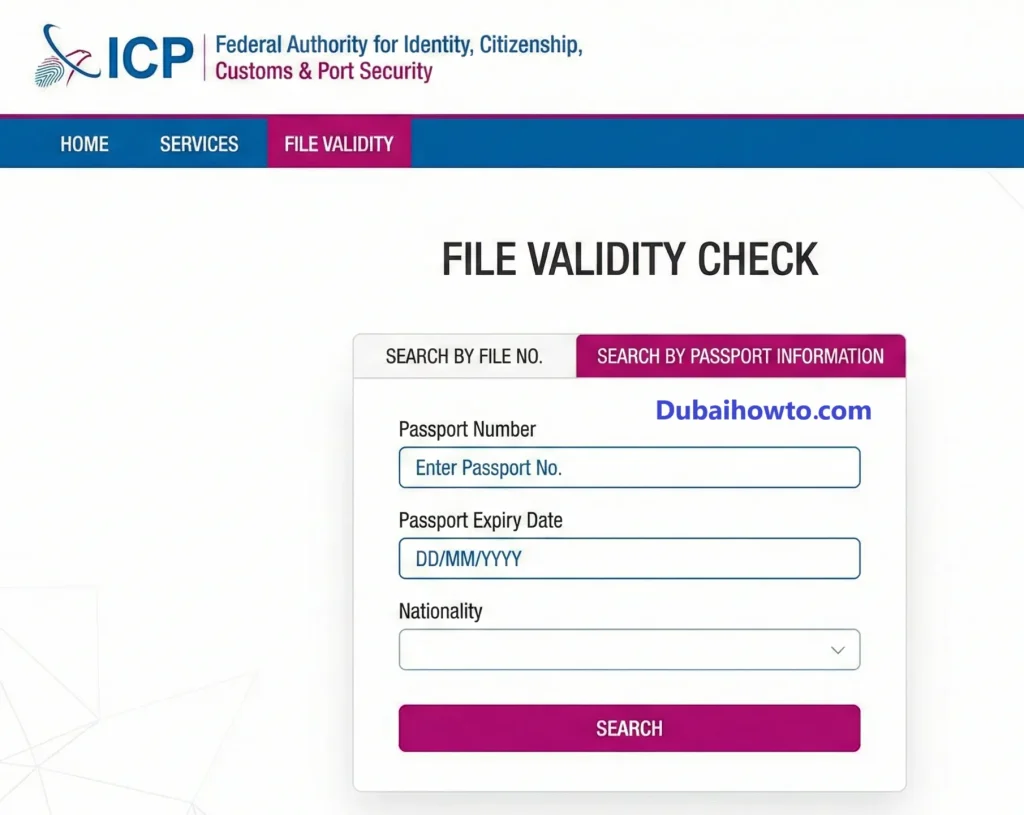
Step 1: Visit the “ICP Smart Services website“ (Federal) or GDRFA (Dubai).
Step 2: Select “File Validity” (on ICP) or “General Inquiry” (on GDRFA).
Step 3: Select “Search by Passport Information”.
Step 4: Enter your Passport Number, Passport Expiry Date, and Nationality.
Step 5: Check the status. If the file status is “Active,” your visa is valid. If it shows “Closed” or specific warnings regarding absconding, you may face an immigration ban at the airport.
Types of Bans vs. Checking Portals
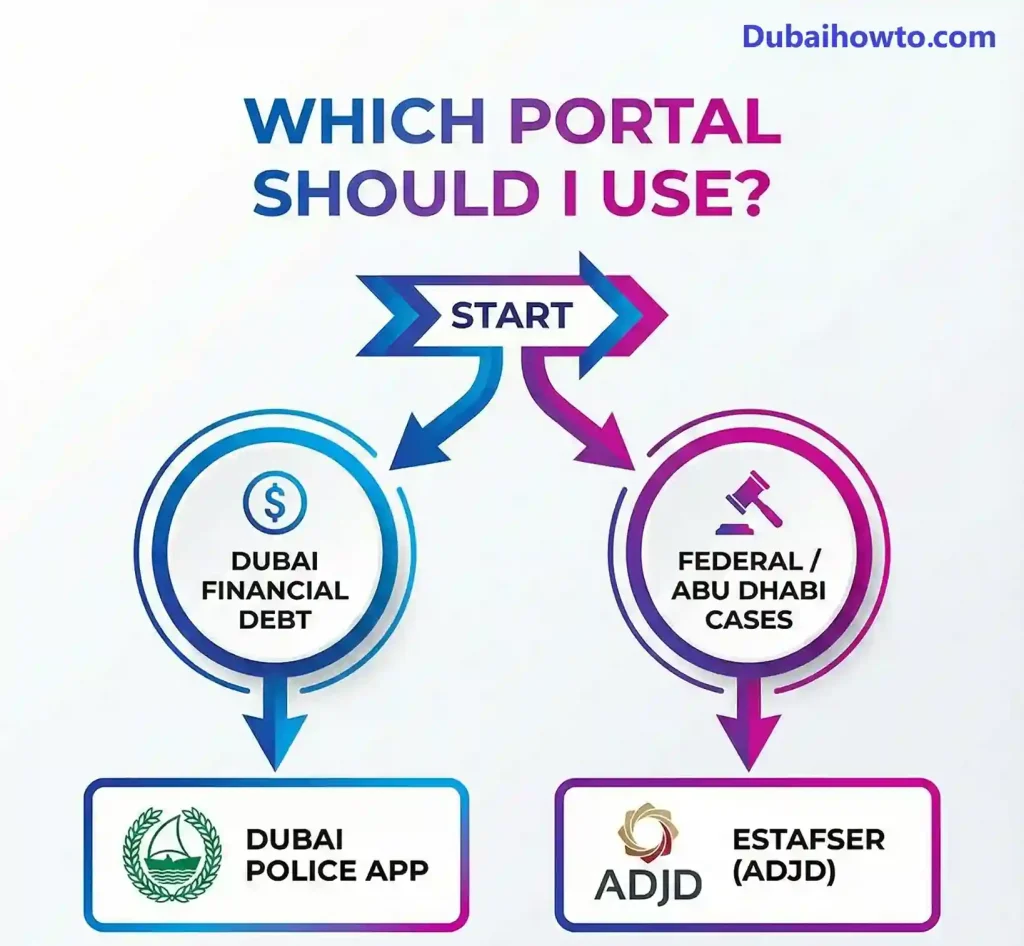
| Ban Type | Jurisdiction | Best Portal to Check | Required ID |
| Financial Debt | Dubai | Dubai Police App | Emirates ID |
| Criminal/Civil | Abu Dhabi/Federal | ADJD Estafser | Unified Number (UID) |
| Immigration | All UAE | ICP / GDRFA | Passport Number |
| Labour Ban | All UAE | MOHRE App | Labour Card/EID |
Common Reasons for a Travel Ban
Authorities typically impose travel bans for specific legal or administrative reasons. Knowing these can help you prevent them.
- Bounced Cheques: The most common cause, usually triggered by banks for unpaid loans or credit cards.
- Immigration Violations: Overstaying your visa without paying fines or “absconding” (leaving a job without notice).
- Rental Disputes: Failure to pay rent can lead to a landlord filing a case that results in a ban.
- Criminal Cases: Any active investigation for theft, assault, or other crimes automatically triggers a ban.
Pro Tip
“Never assume your travel ban is lifted the moment you pay a fine. While the UAE introduced ‘automatic lifting’ of bans after payment in late 2024, system updates can take 24 to 48 hours. Always obtain a ‘Removal of Ban’ certificate or written confirmation from the police or court before booking your flight.”
Final Thoughts
Checking your travel ban status is a critical step before planning any international trip from the UAE. While the Dubai Police and Estafser portals cover the majority of cases, they are not 100% exhaustive for every specialized court order. If you suspect a complex legal issue, hire a lawyer or visit a police station (specifically the Al Aweer branch in Dubai for immigration issues) to get a definitive answer.
Frequently Asked Questions
1. Can I check my travel ban in UAE with a passport number only?
Direct police checks usually require an Emirates ID or Unified Number. However, you can check immigration and visa validity (which affects travel) using your passport number on the ICP or GDRFA websites. To check for police bans, use your passport to find your UID first.
2. How do I check if I have a travel ban in Dubai specifically?
Use the Dubai Police Smart App or website. Select the service called “Criminal Status in Financial Cases.” You will need your Emirates ID. This service is free and provides instant results regarding debt-related bans in Dubai.
3. Is the travel ban check online free?
Yes, government portals like Dubai Police, ADJD (Estafser), and ICP provide these inquiries for free. Be cautious of third-party websites that charge a fee for this public information; they are often just acting as unnecessary middlemen.
4. What should I do if I find a travel ban against me?
Do not attempt to travel. If it is a financial ban, contact the bank or creditor to settle the debt. Once paid, ensure the bank informs the police to lift the ban. For criminal or unknown bans, consult a lawyer immediately to review the case file.
5. How long does it take to lift a travel ban after payment?
Under recent regulations, bans are often lifted automatically upon settlement. However, technically it can take anywhere from 24 hours to 5 working days for the system to update across all border control points. Always verify the removal online before flying.
Last updated: October 2026
Reviewed by: Dubaihowto Content Team (Legal & Expat Services)

Author: The DubaiHowto Editorial Team
DubaiHowto is an independent informational platform created to help UAE residents and visitors understand everyday services such as public transport, telecom, government procedures, visas, fines, and utility systems.
Our editorial team researches and verifies content using official UAE sources (including government portals, service providers, and regulatory authorities) and real on-ground experience of living in the UAE. Each guide is written to be practical, easy to understand, and regularly updated to reflect the latest rules, fees, and procedures.
We focus on clarity, accuracy, and usefulness — especially for people navigating UAE systems for the first time. Learn More about DubaiHowto.
Last reviewed: February 2026. Sources: Official UAE portals and service providers